Welcome to The Welcome Waggin’! Please read our note from Dr. Waeltz!
We bring the care to you.
By minimizing the stress of travel, reducing the likelihood of disease transmission, and observing your pet in its natural surroundings, we are able to help maintain your companion’s optimal health and well-being. Home veterinary care is ideally suited for working professionals, busy parents, multiple pet owners, the elderly or disabled, and owners of animals that become anxious in a hospital setting. As a pet owner, you are fortunate to live in an area supported by veterinary specialty centers and 24-hour care facilities. We are privileged to work with these hospitals or your existing animal clinic to provide the most comprehensive veterinary care.

How it works:
Each pet and family are unique, and we strive to treat them as such. Because we are on the road, you will be given an estimated arrival window that is typically an hour in length. Expect the actual appointment to take anywhere from 30 to 60 minutes per pet. We want to get to know you and your family inside and out and appreciate flexibility in scheduling. Emergencies occasionally arise or we experience travel delays, and we will do our best to let you know if our arrival window changes.
Our Mission and Purpose
We live out our purpose by prioritizing care for our employees, our clients, and our patients.
By creating a work environment that fosters acceptance, love, vulnerability, and continuous growth for our employees, we are better able to take care of our own wellbeing so we can show up every day prepared and excited to take care of our patients.
When our team is cared for, we are better able to service our clients and their pets. We pride ourselves on providing kind, empathic, excellent, and comprehensive veterinary care. We love our clients just as much as we love their pets. We understand that the success of our treatment plans directly correlate to how much we educate and work together with our clients on understanding the needs of their pets.
We practice low-stress handling techniques and perform as many treatments as possible with our clients present. We work hard to reduce the stress often associated with veterinary visits so that you and your pet have less anxiety over veterinary care. We believe that transparency leads to better understanding and open communication.
By preparing and supporting our clients to be active members of the pet care team, everyone is benefitted.
Our patients benefit. Our clients benefit. We benefit.
We are changing the presence of veterinary medicine and raising the consciousness of animal lovers, one employee, one patient, and one client at a time. We welcome all.
We are The Welcome Waggin’
Our Core Values
Celebrate
awe that is veterinary medicine and the human-animal bond. We choose to celebrate our wins, instead of breaking down on failures. We choose to celebrate the great work we are doing, the impact we are making, and the lives we are saving.
In the same respect, we choose to celebrate life lived even as we are saying goodbye.
Kindness
Adaptability
Community
Transparency
Continuous Growth
We go above and beyond during every visit.
Thanks again

Stay in the know!
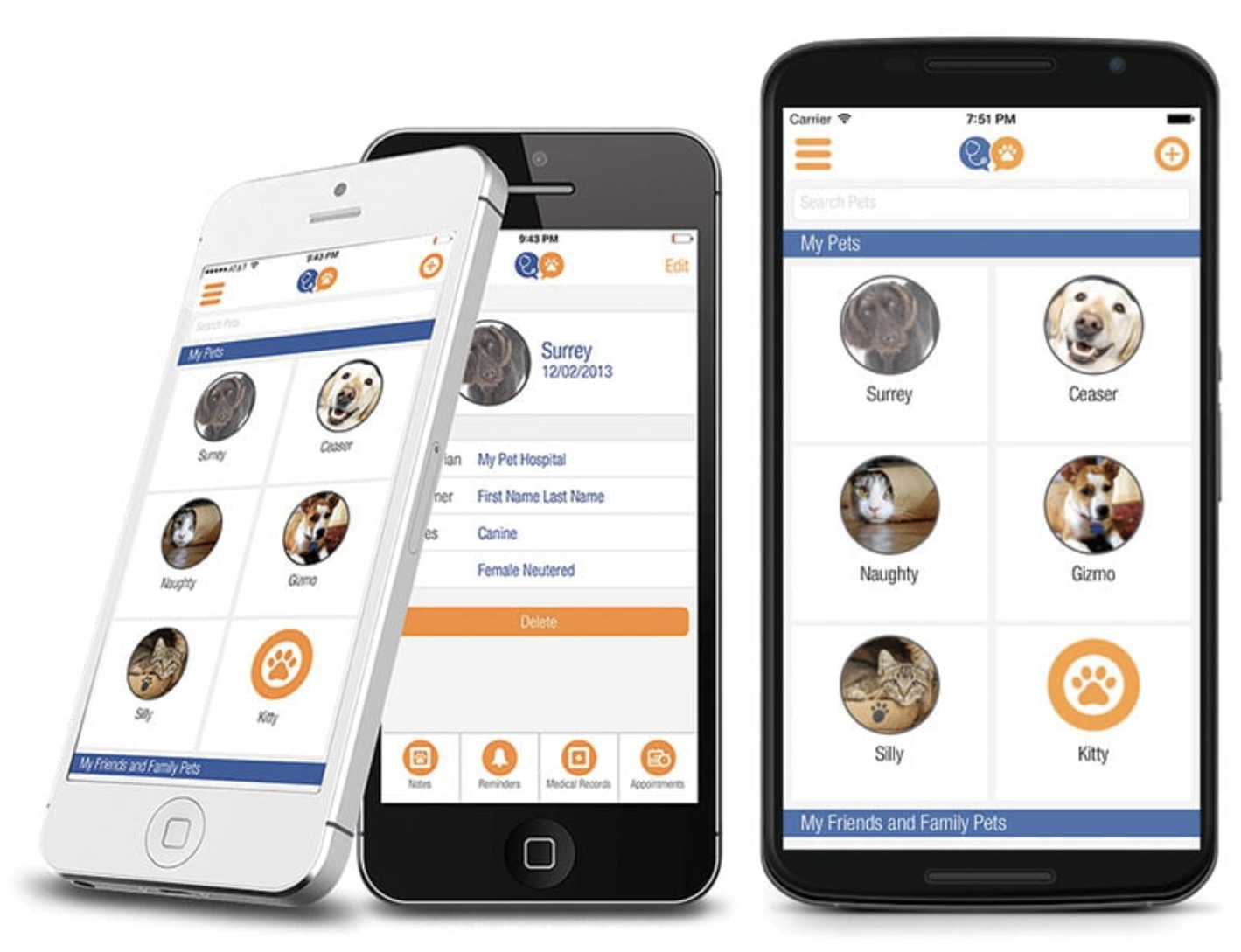
Download our app!
- Receive appointment reminders and confirmation
- Request an appointment or a refill
- Text message updates and communication
- And more!
If you have any questions about the app or need assistance with downloading the app, please be sure to contact our team! We’re here to help.